Sunday, October 17, 2010

Spin Bikes and Hockey Player's


Let’s take a second to look at one commonly used hockey conditioning tool. Quick side note: This modalitie would be used in an interval training fashion only. I don’t think traditional steady-state aerobic training has any merit for hockey players at all. This includes “recovery rides”, which may have a mental benefit for hockey players, but probably lack any physiological benefit in light of the long known fact that nearly ALL lactic acid is processed within about an hour of ceasing activity (1,2,3). I realize this may offend some of my European Hockey Friends. I apologize in advance.

THE EXERCISE BIKE

Pros:
Leads to similar “burning” feeling of the legs as a long shift. Improves local muscular endurance of thigh musculature.

Cons:
Biking involves MORE time in an unwanted hunched over posture (same as sitting in a desk or in a car). One of the main goals of our training programs is to REVERSE this terrible posture as it leads to range of motion limitations, undesired compensations, decreased performance and increased injury risk.

The upper body is relatively still while biking. Aside from the obvious fact that your arms move while playing hockey, because biking only uses your lower body it is more difficult to get your heart rate up to the near-max levels characteristic of a high intensity shift. Interval failure is more likely to result from localized muscular fatigue in the legs than from a more global energy delivery failure.

When players get tired on a bike, they begin to pull up on the foot straps, which puts more stress on their hip flexors. Sitting on a bike and pulling repetitively with your hip flexors reinforces the hip flexor tightness that too many hockey players already suffer from.

Biking involves putting force downward into floating pedals with a pre-determined range of motion. Skating involves putting force into the ice in a free range of motion. The force production and joint stabilization characteristics of biking and skating are completely different.

Should hockey players bike? I don’t think so. If you need a good leg burn, DO SETS OF LEG CRANKS. If you want good conditioning, use the modalities I’ll explain in my next post. Check back soon!

Friday, October 15, 2010

MOMAR PICS


Here's the first set of pictures from MOMAR.


Heading out to the start of the kayak leg at 9 am
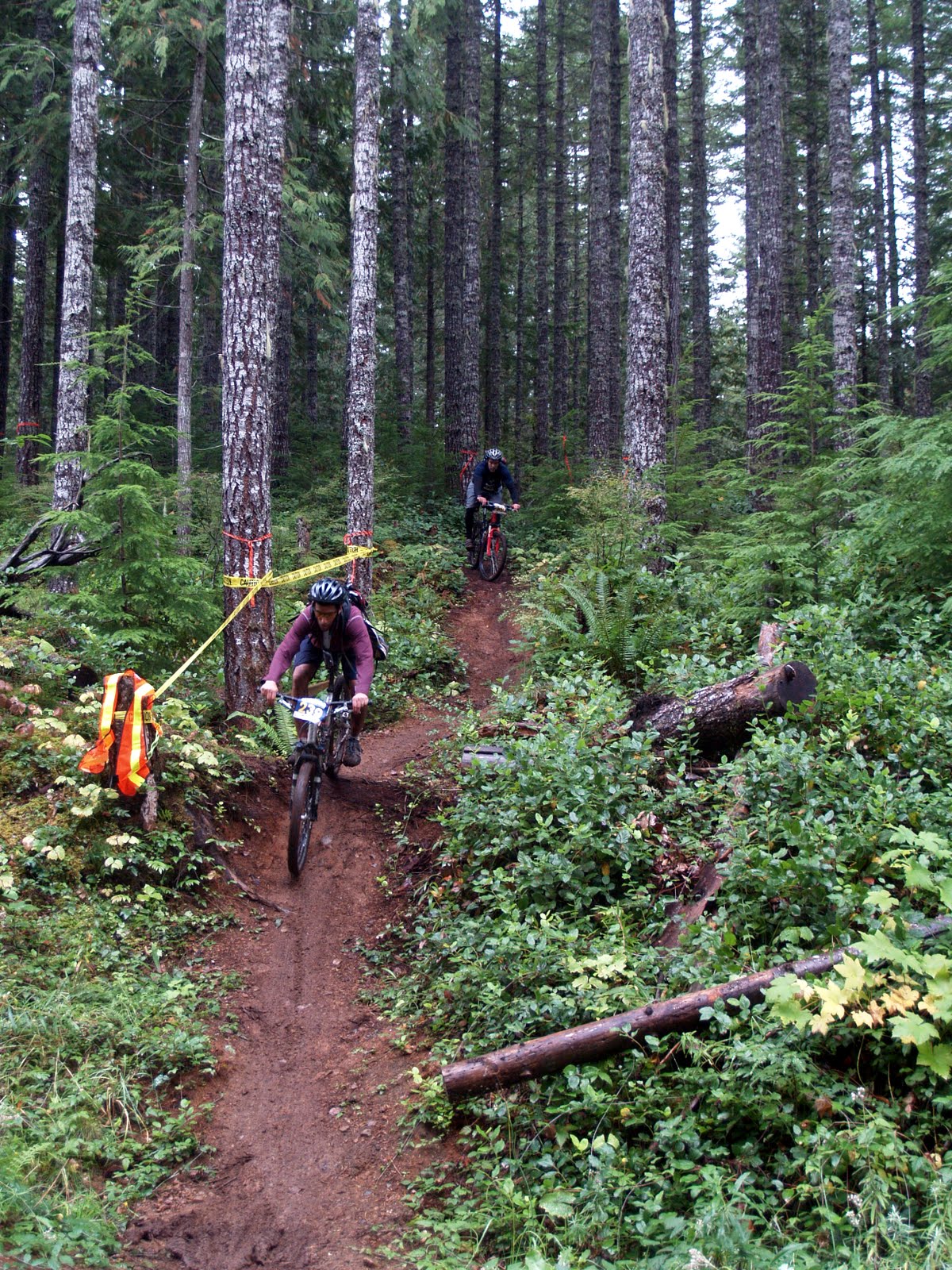
Somewhere in the BUSH.


Some SWEET Single Track

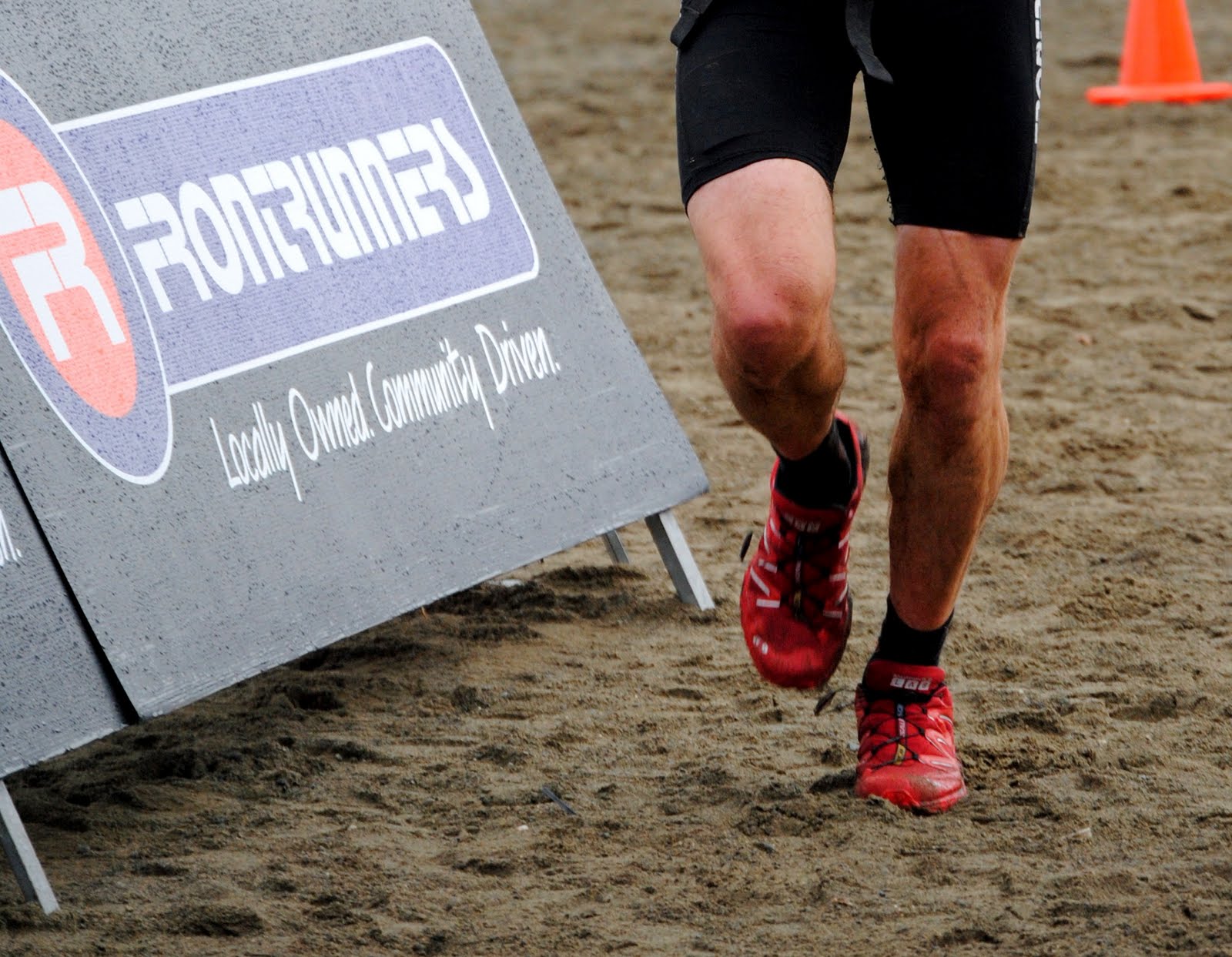
I like RED shoes.
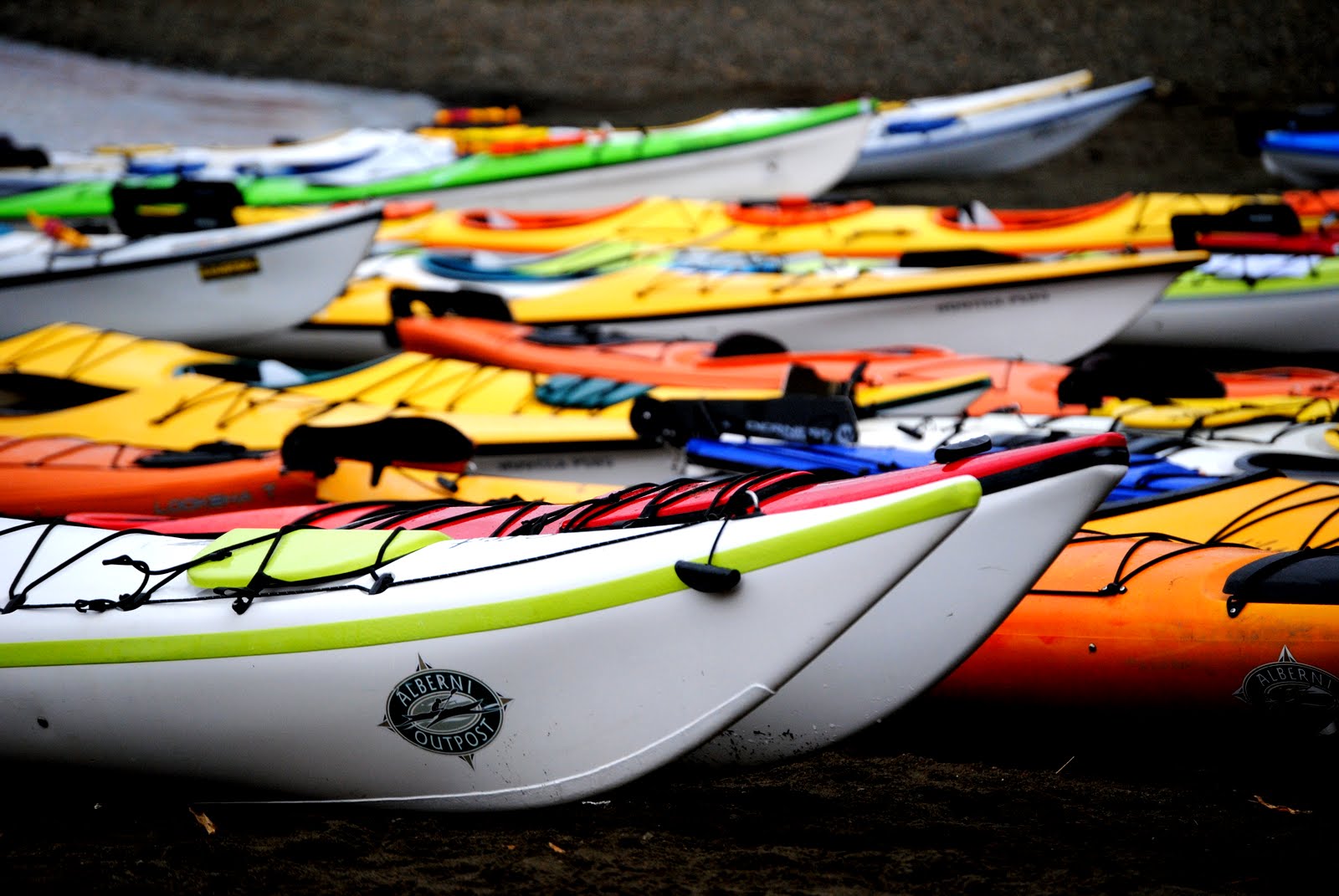
Kayak's ready to go.


Darryl and I , grinding it out!


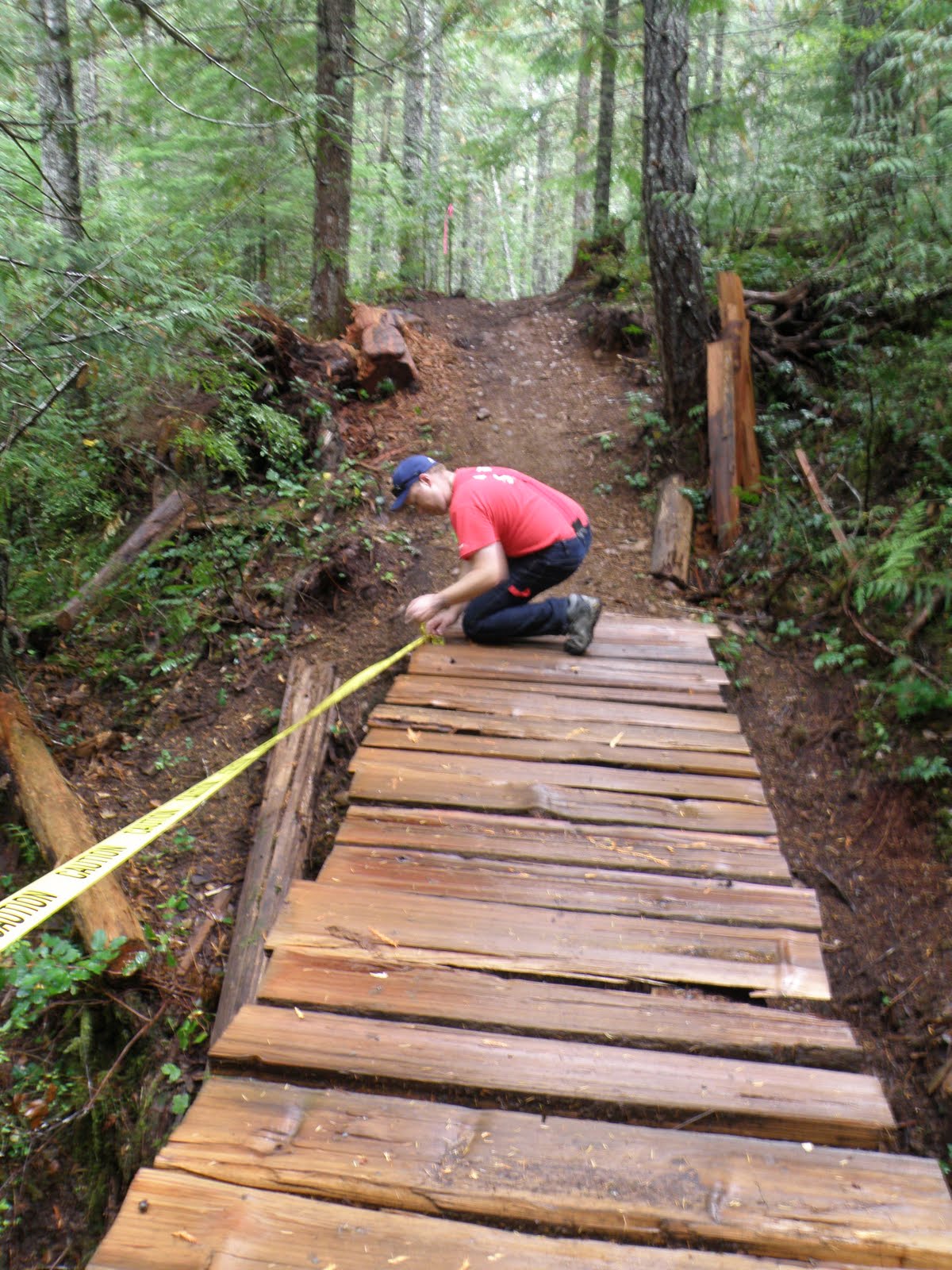
Mountain Bike bridge crossing, and the river below...


Pictures from the Finish, 7 hrs after starting. I was unable to smile crossing the finish line, to tired.


Thursday, October 14, 2010

I GOT MY BELL RUNG.


With the start of hockey season upon us I thought it would be a great time to talk about concussions and what is at stake. So what exactly is a concussion? The following is a quick overview of what a concussion is:

The term concussion describes an injury to the brain resulting from an impact to the head. By definition, a concussion is not a life-threatening injury, but it can cause both short-term and long-term problems. A concussion results from a closed-head type of injury and does not include injuries in which there is bleeding under the skull or into the brain. Another type of brain injury must be present if bleeding is visible on a CT scan (CAT scan) of the brain.

  • A mild concussion may involve no loss of consciousness (feeling "dazed") or a very brief loss of consciousness (being "knocked out").

  • A severe concussion may involve prolonged loss of consciousness with a delayed return to normal.

When to Seek Medical Care

Call the doctor about any of the following situations. The doctor will recommend home care, set up an appointment to see the patient, or send the patient to a hospital's emergency department

  • A person struck a hard object with the head (for example: tile floor, ice, bathtub) but did not lose consciousness

  • Mild dizziness or nausea after a head injury

  • Loss of memory of the event (amnesia) for just a few minutes

  • Mild Headache with no vision disturbances

Go to an emergency department by ambulance in the following situations. For people with less severe injuries not requiring ambulance transport, a car may be taken to the hospital.

  • Severe head trauma, i.e., a fall from more than the height of the person or a hard fall onto a hard surface or object with resulting bleeding or laceration.

  • Any child that loses consciousness as the result of a head injury.

  • Prolonged loss of consciousness (longer than two minutes)

  • Any delayed loss of consciousness (for example, the injured person is knocked out only momentarily, then is awake and talking, then loses consciousness again)

  • Vomiting more than once

  • Confusion that does not go away quickly

  • Extreme drowsiness, weakness, or inability to walk

  • Severe Weakness

  • Loss of memory of the event (amnesia)

  • Perseverating (saying the same thing over and over)

  • If the person fails to regain consciousness after two minutes, or the injury is very severe even if two minutes have not passed, DO NOT move the person. Prevent movement of the neck, which may cause spinal injuries. If the person needs to vomit, carefully roll the person onto his or her side without turning the head. Call 911 immediately for help.

If you are unsure of the severity of the injury, take the person to the emergency department immediately.

Should an injured person be allowed to fall asleep? Many mistakenly believe it is important to keep people, especially children, awake after they have been struck on the head. Children are often more emotionally upset than they are physically injured after a minor fall. They will cry and appear distressed, but as the parent rushes them to the hospital, children may begin to calm down. Because they have expended a lot of physical and emotional energy crying, they will often want to fall asleep.

  • You do not need to keep the child awake. In many cases it may be helpful to the emergency doctor to be able to awaken the child who is now more calm and rested and will behave normally. This gives the doctor a better assessment of the severity of the head injury.

  • If, however, a child who was initially normal after a head injury cannot be awakened, or is extremely difficult to awaken, then the child may have a more serious head injury and should be evaluated by a doctor.

Tuesday, October 12, 2010

SOMETHING DIFFERENT


Hey Guy's, A few of us are getting to together this weekend and trying something new, an orienteering race.


What is Orienteering?

Orienteering is a sport in which orienteers use an accurate, detailed map and a compass to find points in the landscape. It can be enjoyed as a walk in the woods or as a competitive sport.

A standard orienteering course consists of a start, a series of control sites that are marked by circles, connected by lines and numbered in the order they are to be visited, and a finish. The control site circles are centered around the feature that is to be found; this feature is also defined by control descriptions (sometimes called clues). On the ground, a control flag marks the location that the orienteer must visit.

To verify a visit, the orienteer uses a punch hanging next to the flag to mark his or her control card. Different punches make different patterns of holes in the paper.

The route between "controls" (refers to the flag or the site) is not specified, and is entirely up to the orienteer; this element of route choiceand the ability to navigate through the forest are the essence of orienteering.

Most orienteering events use staggered starts to ensure that each orienteer has a chance to do his or her own navigating, but there are several other popular formats, including relays and events in which the orienteer must find as many controls as possible within a specified time.


Mount Tolmie Park - North of Summit

DATE: Sunday, October 17, 2010

As in previous years, this is a training day disguised as two fun-filled competitive events. We will also have a course available for those who are new to orienteering.

Location: Near the parking lot north of the summit of Mount Tolmie.
Look for the signs directing you to the registration area.

Registration: 12:30 pm

Details:

Course 1 - This course is for those just new to orienteering and those who would like to try out orienteering for the first time. This will be a relatively easy course to help you get used to map reading and the concept of orienteering. Enjoy as an easy race or a map walk at your own pace.

Contour-O - This event will have a mass start at 1:15 pm. To make the orienteer focus on the shape of the land and contours, the map will have no trails or roads! The format for this event is as a Score-O (collect the controls in any order). This event is suitable for experienced orienteers looking for a good technical challenge.


IF YOU HAVE ANY QUESTIONS ABOUT SUNDAY, I'LL BE AT THE GYM WEDNESDAY , FRIDAY AND SATURDAY. IT'S A GREAT WAY TO TRAIL RUN 5 KM.


I HOPE TO HAVE A FEW PICTURES FROM MOMAR POSTED THIS WEEK,

Wednesday, September 22, 2010

MOMAR and LOTS OF RAIN!!!

RACE SUPPLEMENTS
RACE SUPPLEMENTS
RACE SUPPLEMENTS
RACE SUPPLEMENTS


The Forecast for the upcoming weekend is calling for 35-45 mm of RAIN on Saturday, the day
I go ADVENTURE RACING at Mt. Washington with teammate Darryl Woodley. It's a 50 km course with some Mountain Biking, Paddling, Bushwhacking and Orienteering. It will mean lots of GOOD WET MUDDY FUN in the Back Country. I'm hoping to use this experience to get others to try something NEW and EXCITING in 2011.

How did I train for this style of RACING? In a quick review I trained in all events featured this weekend. With the least amount of time spent in a Kayak. I rode 2-3 x per week ALL OUT , HARD AS I COULD GO for 60-90 minutes. NO WASTED TIME! It got my WIND UP ( CARDIO) in a SHORT period of time. I also spent some time in the BACK COUNTRY SOLO HIKING. I was able to practice my navigation and map reading skills on each outing.
.AND NOT TO FORGET 2-3 Metabolic Conditioning sessions PER WEEK at CVI or at HOME. My goal is complete this event in under 5 hour, which I feel is completely do-able as long as WE DON'T GET LOST!

HOW DID I CARE FOR MY BODY?

By utilizing all MANUAL THERAPIES I had available to me. THANKS to DR. ROBYN at BACK TO BACK for the ADJUSTMENTS AND A.R.T. DR KYLE for B-12 Injections and Homeopathic Medication to keep me STRONG AND COLD AND FLU FREE, YEAH!. DR STEPHAN for the ACUPUCNTURE and MOTOR POINT THERAPIES ALONG WITH CHINESE HERBAL FORMULAS .

SUPPLEMENTATION consisted of products supplied from DR JULIA AND Back to Back Chiropractic. I take on a daily basis the following: 3 Glucosamine tablets, 2 Multi-Vitamins tablets, 2 Cardio Support tablets, as well as Hydration Replacement with ENDURA. SEE ABOVE FOR PRODUCT IDENTIFICATION. ALL PRODUCTS ARE AVAILABLE FOR SALE FROM BACK TO BACK CHIROPRACTIC.


A BIG THANK YOU TO OUR SPONSOR'S

BACK TO BACK CHIROPRACTIC www.back2back.com

ALPINE MARINE DIVISION. Set us up with an Awesome Double Kayak. and All the gear to go with it.

CHERYL LAIDLAW SEE TO THE RIGHT FOR CONTACT INFO.

CROSSFIT VANCOUVER ISLAND


Tuesday, September 14, 2010

WARM UP WARM UP WARM UP

The above picture is from Tuesday night practice with the Thunderbirds. At approximately 5 minutes into practice , coach Jeff has them working a deep squat glide and stretch. If our player's are not effectively warmed up prior to this drill , the effectiveness is lost. A full dynamic off ice warm up is crucial! Warm up should include hip and shoulder mobility, deep body weight squats, spinal flossing drills, as well as a brief intense cardio blast. NO LONG JOGS, NO STATIC STRETCHING. MOVEMENT MOVEMENT MOVEMENT! Usually ten to fifteen minutes is suffice for most player's. Those dealing with limitations due to previous injuries should consider warming up for 20 minutes or more. Remember this. When you hit the Ice, you should be ready to GO.


“We can take one of two roads in life: One is the broad, well- traveled road to mediocrity, the other is the road to greatness and meaning.” -Stephen Covey


Sunday, September 12, 2010

Better Cardio?


What if I told you that a simple inexpensive supplement may be able to help increase your VO2. Would you be interested? Well if so, I'll let you in on a Chinese Herb that has been used for Centuries to help open up the Lungs and increase performance, it's called Cordyceps. In one study published in Medicine & Science in Sports & Exercise, researchers reported that athletes who took 4.5 grams of cordyceps daily for six weeks had double the rate of oxygen intake as those in the placebo group.

Cordyceps Extra Strength

The long history of Cordyceps tells of how it was used in Traditional Chinese Medicine for energy, enhanced libido, sports and work performance.

Main Applications:

The medicinal mushroom Cordyceps sinensis has gained wide popularity and is used for its health-promoting qualities, therefore is seen to assist with:

  • Vitality
  • Energy
  • Libido
  • Immune enhancement
  • Adrenal insufficiency

The 5 Times Factor

Lab grown, Purica’s 5x hybrid Cordyceps is a Full Spectrum product, including mycelium, fruit, spores, primordial and extra cellular compounds.

Analysis of Wild Collected Cordyceps and Cultivated Cordyceps reveals startling news! For the first time ever, Cordyceps has been cultivated in the laboratory which not only matches the chemical analysis of wild Cordyceps, but also exceeds the potency by a factor of FIVE!

  • Contains 7 different strains
  • Increases ATP by 30% (energy responsible for heart beat, muscle movement and brain processes) and oxygen utilization by 40%

If you are interested in giving it a try, send me an email coachwarbeck@gmail.com