Saturday, October 23, 2010

Sunday Ride in the park? and some FEEDBACK?

The First two pictures are of the highway exit off of #1 Highway. It's about 3km past the SPLIT ROCK on the TOP of the MALAHAT.


GO WEST on Mill Bay rd. as shown in the picture below.


The picture below is the Meeting point for the ride. Two yellow gates and a Large Gravel Mound to the right of the gates.

A group of us are still planning to ride tomorrow afternoon around 130pm, for approx 90-120 minutes of riding.

Direction to the starting point of the ride are fairly simple. You take the mill bay road exit and circle back under the highway, as if you where headed back to victoria. We will meet at the beginning of the OLD HAUL road.( two yellow gates). See the provided pictures for exact location.

See you tomorrow

Dave

Wednesday, October 20, 2010

Core Exercises and Low back health


Get our FREE Newsletter!

You'll get immediate access to the f

Understanding Your Abs

There’s been tons of talk lately about the abs, and even more specifically, the rectus abdominis (RA). After all, everyone wants that lean, sexy six-pack before summer hits, right?

Here’s the problem: We’re still caught up in outdated training methods, and not focused on what science has brought to light over the past 5-10 years. Let’s take a quick look at the actual anatomy of your abs, as well as the various functions that your RA provides.

Anatomy

The RA is a large, beaded muscle that runs from your xiphoid process and bottom of your rib cage to your pubic symphisis. It’s interesting (and important) to note that instead of being one long, continuous muscle, the RA actually is broken up into several smaller sections. But more on that later.

The RA has several well-defined roles, along with some lesser-known roles, too. Let’s examine each.

Functions

The primary functions of your RA include:

- Trunk flexion/Resisting Trunk Extension
- Posterior Pelvic Tilt
- Transmission of “hoop” stresses

Let’s look at each in a little bit more depth, as this is where the story starts to unfold.

Trunk Flexion

Any trainer or fitness enthusiast who knows anything can tell you the RA can promote flexion of the trunk. This is why you’ve seen the ridiculous number of ab rollers, Bender balls, and other gimmicky guru crap being sold at 2 am in the morning for decades.

The idea, initially, was that sit-ups were the best to promote this flexion movement pattern. Then, people started looking deeper and decided that sit-ups placed too much compressive loading on the back, or that they didn’t “isolate” the RA from the hip flexors. Thus, crunches were deemed better for “isolating” the abs and keeping the back healthy.

The problem, however, is that while your RA is capable of producing trunk flexion, the underlying anatomy leads us to believe that this role isn’t nearly as important s the fitness industry has given it credit for. At the Chicago Perform Better Summit in 2007, world reknowned spinal biomechanist Dr. Stuart McGill went so far as to say that if your RA was really there for crunching and trunk flexion, instead of having the beaded sub-sections, you would have one long, continuous hamstring instead!

We also need to ask ourselves another question: At what cost are we crunching? This is where we have to examine the big picture. Will trunk flexion help “bring out” our abs? Maybe – but at what cost? When we examine the big picture, we start to realize several things.

1 – Trunk flexion works to shorten our RA. Doing so exerts a downward pull on our ribcage, effectively pulling us into an increased thoracic kyphosis or “slouched” upper body posture. Not only is this aesthetically unattractive, but virtually useless to us as weight trainers, fitness enthusiasts or athletes. By pulling our body into an increased kyphosis, we lose the ability to get our scapulae into the appropriate positions and increase the likelihood of shoulder and rotator cuff problems.

2 – Research by McGill and others has shown that repetitive flexion/extension of the spine is injurious. Our spine only has so many flexion/extension cycles in it; once we hit a certain threshold, we get injured!

Mike Boyle has a great analogy here – it’s like a credit card. Bend a new credit card back and forth and, initially, it bounces back. But if you continue to bend that card, you eventually start to see a white crack. Continue to bend it back and forth, and over time that crack leads to a break. Your spine is not much different.

Here’s another way to think about this – instead of thinking about promoting movement, start to think about how your muscles work to control or resist various movements as well. In this case, your RA not only promotes trunk flexion, but it also works to resist trunk extension! It’s not rocket science, but it’s a huge step forward in your thinking. Far too often, we only think of how muscles work in an open-chain, textbook definition, instead of what they do in real life.

However, there might be some exceptions to this rule – I can think of a few high-end athletes who might need some judiciously included trunk flexion in their programming. For most of the population, however, hopefully we can agree that crunching and trunk flexion movements probably aren’t in the best interest of our bodies.

Posterior Pelvic Tilt

The second function of the RA is to promote posterior pelvic tilt, and/or to control pelvic alignment. We can thank Florence Kendall and her fantastic book Muscles: Testing and Function for tuning us into this one.

(Note: If you are unfamiliar with the concept of force coupling or pelvic alignment, definitely check out my “Hips Don’t Lie” article.)

While many are focused on upper vs. lower RA, it only has one common nerve supply and therefore can’t be isolated into upper and lower sections. Instead, what I feel most people are really focusing on when they think upper vs. lower abs is the difference between movements that promote trunk flexion, and those that control pelvic alignment and/or resist trunk extension.

Many people assume that exercises like leg throws and ab wheel rollouts must hit their “lower” abs harder, because they get so sore following these exercises (especially when compared to crunches). The primary difference, however, is that these movements emphasize the negative portion of the lift. Eccentric exercise has been proven time and again to increase delayed onset muscle soreness (DOMS), so it’s not so much that you’re training different muscles as it is that you’re shifting the type of training stress. Or it could just be that you’re doing something “new”, which is also virtually guaranteed to make you sore. It’s not necessarily better, it’s just different. But I’m getting a little off target here; I digress.

While the RA does promote posterior pelvic tilt (or gets us back to neutral if we’re in an anterior tilt), it’s rarely the key to the puzzle. For instance, Kendall cites the differences when testing someone’s strength in a curl-up/crunch versus a leg lowering exercise. Often, you’ll see someone with no issues passing a curl-up test, but give them a leg-lowering test where they have to control pelvic alignment and they get crushed.

In this case, it’s not so much a matter of having a weak RA as it is weak external obliques. Try this: Have your client (or yourself) set-up in a pillar hold/plank position with a PVC pipe along their spine. There should be three points of contact; the back of the head, the upper back, and the glutes. Often, you’ll see clients who can keep their hips up, but they exaggerate their kyphosis and lose their 3 points of contact. This is a classic instance of RA dominating the external obliques.

Instead of using all the muscles of the torso to promote core stability, their rectus dominates and “shortens,” pulling them into a slouched position through the upper back. This is something that you’ll see time and again when testing/training both the general population and athletes as well.

Transmission of Stresses and Force

The final piece of the puzzle is promoting or transmitting “hoop” stresses that are generated from the obliques. This concept was originally promoted by Porterfield and DeRosa in their book Mechanical Low Back Pain.

The idea here is simple – instead of working to promote movements around the lumbar spine, the RA (along with the rest of the abdominal muscles) was primarily there to prevent movement and transmit forces! Again, this was a huge shift in thinking.

After reviewing McGill’s Ultimate Back Fitness and Performance for the 1000th time, I ran into this fantastic quote:

“Isometrically training the rectus is consistent with its architecture and stabilizing function to enhance performance and power development in the hips and extremities.”

Quite simply, stop moving and start stabilizing!

Think about a baseball player, for instance: Where does he generate his strength and power from?

I’ve never, in my entire life, seen a big hitter who didn’t have seriously jacked hips and thighs. The premise is simple: The hips/thighs store energy, and upon initiation of the movement transmit that energy into the ground. The ground reacts, transmitting force up the leg, through the core, and into the hands and the bat.

This is a fundamental concept – the core doesn’t promote the power itself. Instead, it transmits the power that the hips and thighs have generated.


Thanks to Mike Robertson for a great article.


Part II will be posted later this week. and let's have some feed back people.

Monday, October 18, 2010

Sunday ride in the park? and some FEEDBACK?


This invitation goes out to anyone who enjoys the Back Country and Mountain Biking.


Hey everyone, we are having a group Mountain Bike ride this weekend. Sunday October 24/10 1:30 pm. The riding will consist mostly of deactivated logging roads with a few GOOD climbs, a little bit of single track and a 20+ minute downhill. Make sure you have all the needed gear. Including a helmet, gloves, a good running mountain bike, spare tube or patch kit, water and maybe something to eat.

Where: Malahat/ Spectacle Lake (map of area below) We'll be meeting on the West side of Highway Number 1 on MILL BAY ROAD. You will have to take the Mill Bay Ferry exit and travel back under Highway 1 to the starting point of the ride. The location is kilometer 17 on the below listed map of the area.... p.s. bring a camera


Also, I would love some feedback from anyone reading my blog, i.e. Victoria K..... I would like to further our conversation on Fitness and all the BULL S*&T that we believe to be TRUE.


One of the world's oldest and most-recognized expedition adventure races, Raid the North Extreme returns with it's eighth edition in 2011. The West Kootenays will provide an inspiring and challenging race course in true Raid the North Extreme style - Real Wilderness, Real Navigation, Real Adventure...

Good work to today's top male and female performances.

Top 3 males as RX'd
Jay J. with a time of 14:37, Jason J. with a time of 19:20
Troy R. with a time of 20:33

Top 3 female as RX'd
Yvonne M with a time of 20:16
Louise B. with a time of 20:30
Suzi B. with a time 24:14


Sunday, October 17, 2010

Spin Bikes and Hockey Player's


Let’s take a second to look at one commonly used hockey conditioning tool. Quick side note: This modalitie would be used in an interval training fashion only. I don’t think traditional steady-state aerobic training has any merit for hockey players at all. This includes “recovery rides”, which may have a mental benefit for hockey players, but probably lack any physiological benefit in light of the long known fact that nearly ALL lactic acid is processed within about an hour of ceasing activity (1,2,3). I realize this may offend some of my European Hockey Friends. I apologize in advance.

THE EXERCISE BIKE

Pros:
Leads to similar “burning” feeling of the legs as a long shift. Improves local muscular endurance of thigh musculature.

Cons:
Biking involves MORE time in an unwanted hunched over posture (same as sitting in a desk or in a car). One of the main goals of our training programs is to REVERSE this terrible posture as it leads to range of motion limitations, undesired compensations, decreased performance and increased injury risk.

The upper body is relatively still while biking. Aside from the obvious fact that your arms move while playing hockey, because biking only uses your lower body it is more difficult to get your heart rate up to the near-max levels characteristic of a high intensity shift. Interval failure is more likely to result from localized muscular fatigue in the legs than from a more global energy delivery failure.

When players get tired on a bike, they begin to pull up on the foot straps, which puts more stress on their hip flexors. Sitting on a bike and pulling repetitively with your hip flexors reinforces the hip flexor tightness that too many hockey players already suffer from.

Biking involves putting force downward into floating pedals with a pre-determined range of motion. Skating involves putting force into the ice in a free range of motion. The force production and joint stabilization characteristics of biking and skating are completely different.

Should hockey players bike? I don’t think so. If you need a good leg burn, DO SETS OF LEG CRANKS. If you want good conditioning, use the modalities I’ll explain in my next post. Check back soon!

Friday, October 15, 2010

MOMAR PICS


Here's the first set of pictures from MOMAR.


Heading out to the start of the kayak leg at 9 am
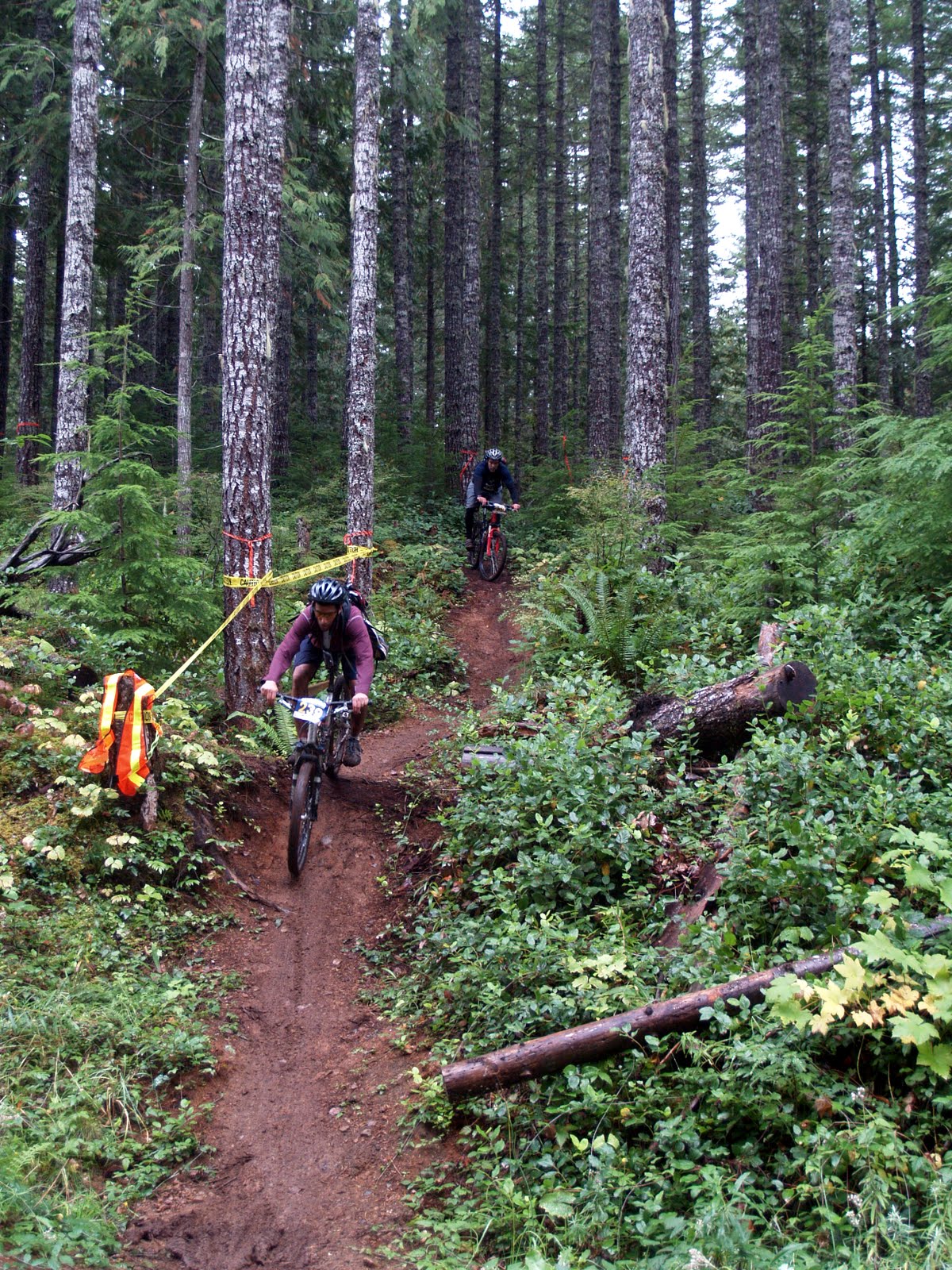
Somewhere in the BUSH.


Some SWEET Single Track

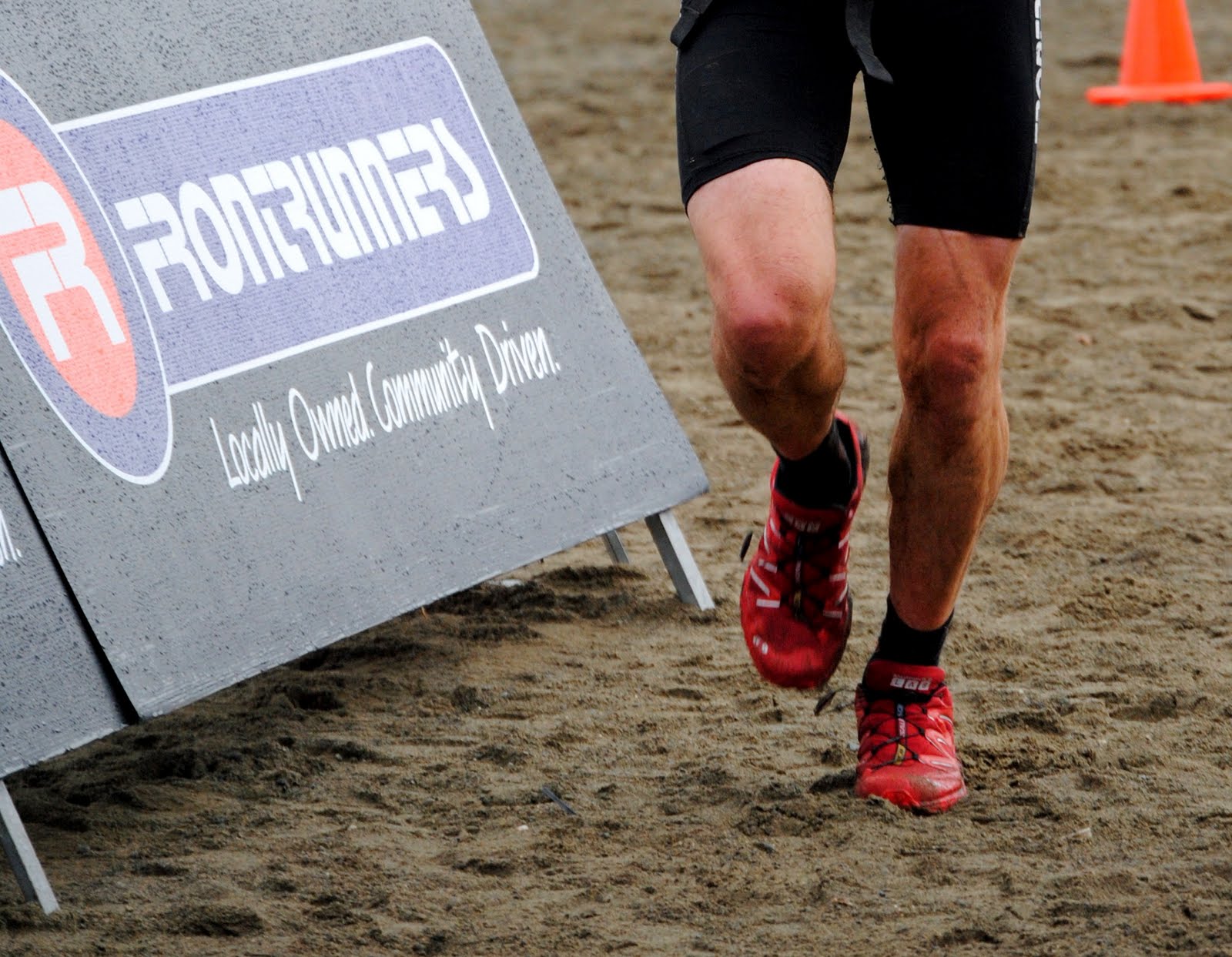
I like RED shoes.
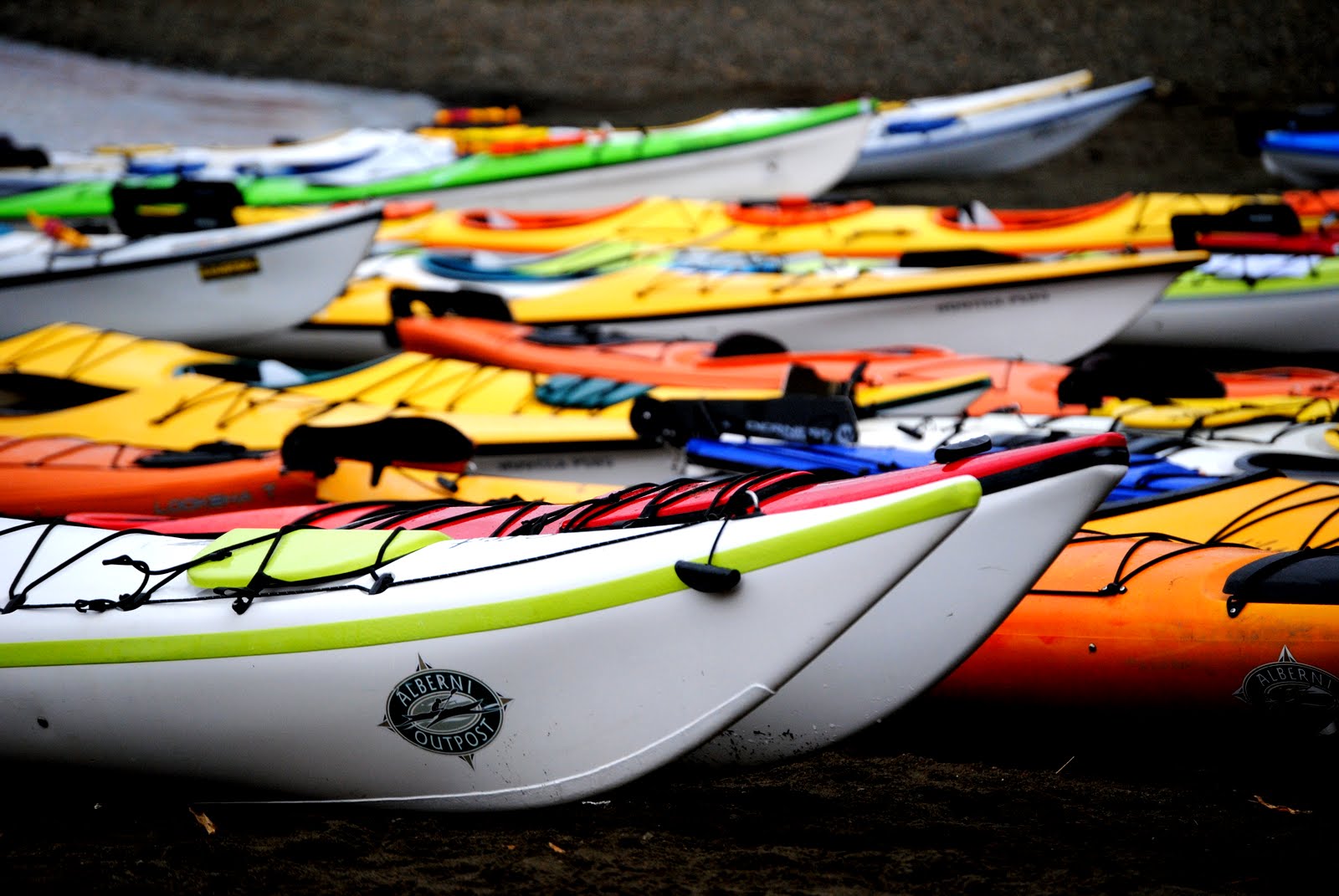
Kayak's ready to go.


Darryl and I , grinding it out!


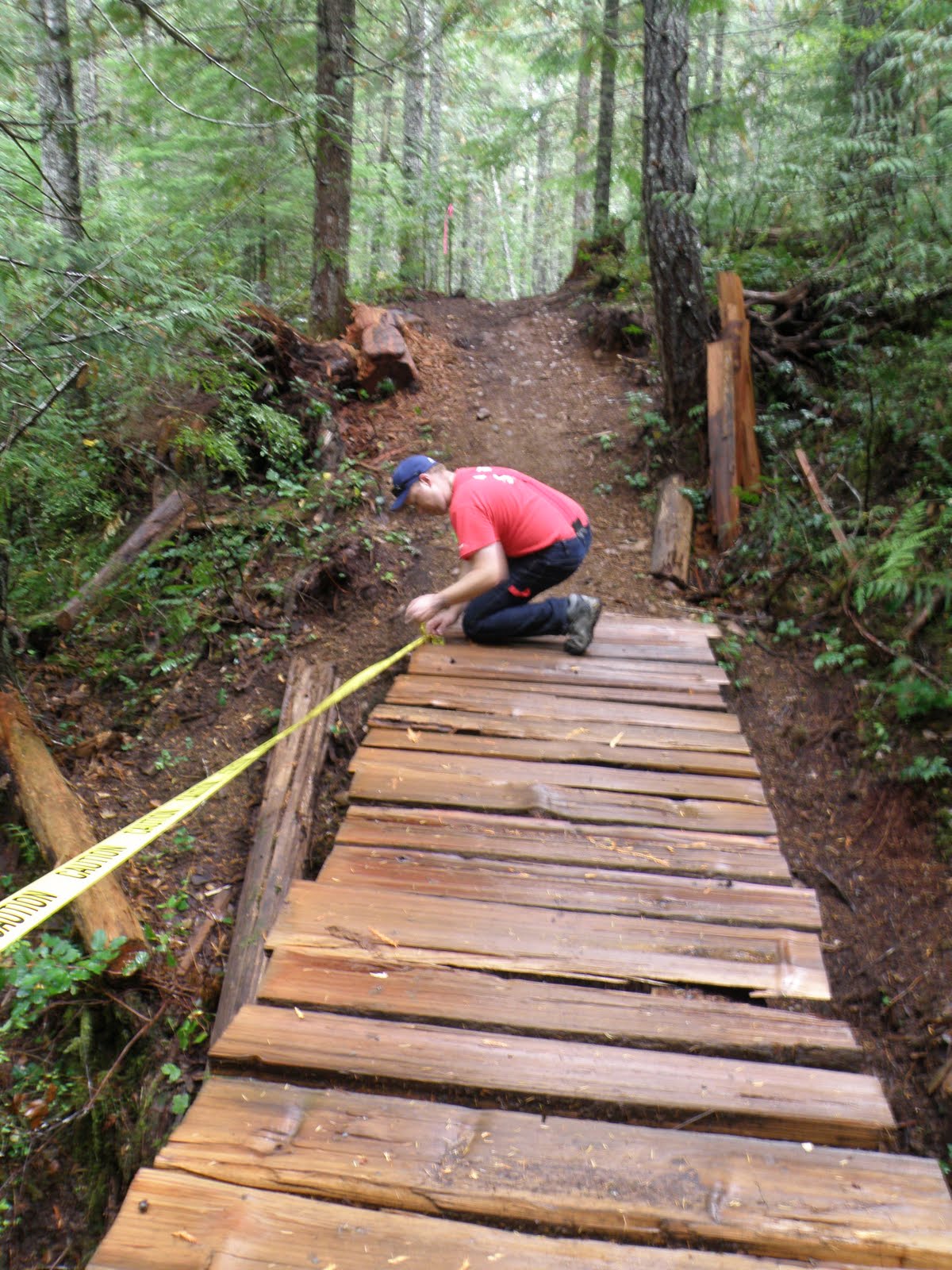
Mountain Bike bridge crossing, and the river below...


Pictures from the Finish, 7 hrs after starting. I was unable to smile crossing the finish line, to tired.


Thursday, October 14, 2010

I GOT MY BELL RUNG.


With the start of hockey season upon us I thought it would be a great time to talk about concussions and what is at stake. So what exactly is a concussion? The following is a quick overview of what a concussion is:

The term concussion describes an injury to the brain resulting from an impact to the head. By definition, a concussion is not a life-threatening injury, but it can cause both short-term and long-term problems. A concussion results from a closed-head type of injury and does not include injuries in which there is bleeding under the skull or into the brain. Another type of brain injury must be present if bleeding is visible on a CT scan (CAT scan) of the brain.

  • A mild concussion may involve no loss of consciousness (feeling "dazed") or a very brief loss of consciousness (being "knocked out").

  • A severe concussion may involve prolonged loss of consciousness with a delayed return to normal.

When to Seek Medical Care

Call the doctor about any of the following situations. The doctor will recommend home care, set up an appointment to see the patient, or send the patient to a hospital's emergency department

  • A person struck a hard object with the head (for example: tile floor, ice, bathtub) but did not lose consciousness

  • Mild dizziness or nausea after a head injury

  • Loss of memory of the event (amnesia) for just a few minutes

  • Mild Headache with no vision disturbances

Go to an emergency department by ambulance in the following situations. For people with less severe injuries not requiring ambulance transport, a car may be taken to the hospital.

  • Severe head trauma, i.e., a fall from more than the height of the person or a hard fall onto a hard surface or object with resulting bleeding or laceration.

  • Any child that loses consciousness as the result of a head injury.

  • Prolonged loss of consciousness (longer than two minutes)

  • Any delayed loss of consciousness (for example, the injured person is knocked out only momentarily, then is awake and talking, then loses consciousness again)

  • Vomiting more than once

  • Confusion that does not go away quickly

  • Extreme drowsiness, weakness, or inability to walk

  • Severe Weakness

  • Loss of memory of the event (amnesia)

  • Perseverating (saying the same thing over and over)

  • If the person fails to regain consciousness after two minutes, or the injury is very severe even if two minutes have not passed, DO NOT move the person. Prevent movement of the neck, which may cause spinal injuries. If the person needs to vomit, carefully roll the person onto his or her side without turning the head. Call 911 immediately for help.

If you are unsure of the severity of the injury, take the person to the emergency department immediately.

Should an injured person be allowed to fall asleep? Many mistakenly believe it is important to keep people, especially children, awake after they have been struck on the head. Children are often more emotionally upset than they are physically injured after a minor fall. They will cry and appear distressed, but as the parent rushes them to the hospital, children may begin to calm down. Because they have expended a lot of physical and emotional energy crying, they will often want to fall asleep.

  • You do not need to keep the child awake. In many cases it may be helpful to the emergency doctor to be able to awaken the child who is now more calm and rested and will behave normally. This gives the doctor a better assessment of the severity of the head injury.

  • If, however, a child who was initially normal after a head injury cannot be awakened, or is extremely difficult to awaken, then the child may have a more serious head injury and should be evaluated by a doctor.

Tuesday, October 12, 2010

SOMETHING DIFFERENT


Hey Guy's, A few of us are getting to together this weekend and trying something new, an orienteering race.


What is Orienteering?

Orienteering is a sport in which orienteers use an accurate, detailed map and a compass to find points in the landscape. It can be enjoyed as a walk in the woods or as a competitive sport.

A standard orienteering course consists of a start, a series of control sites that are marked by circles, connected by lines and numbered in the order they are to be visited, and a finish. The control site circles are centered around the feature that is to be found; this feature is also defined by control descriptions (sometimes called clues). On the ground, a control flag marks the location that the orienteer must visit.

To verify a visit, the orienteer uses a punch hanging next to the flag to mark his or her control card. Different punches make different patterns of holes in the paper.

The route between "controls" (refers to the flag or the site) is not specified, and is entirely up to the orienteer; this element of route choiceand the ability to navigate through the forest are the essence of orienteering.

Most orienteering events use staggered starts to ensure that each orienteer has a chance to do his or her own navigating, but there are several other popular formats, including relays and events in which the orienteer must find as many controls as possible within a specified time.


Mount Tolmie Park - North of Summit

DATE: Sunday, October 17, 2010

As in previous years, this is a training day disguised as two fun-filled competitive events. We will also have a course available for those who are new to orienteering.

Location: Near the parking lot north of the summit of Mount Tolmie.
Look for the signs directing you to the registration area.

Registration: 12:30 pm

Details:

Course 1 - This course is for those just new to orienteering and those who would like to try out orienteering for the first time. This will be a relatively easy course to help you get used to map reading and the concept of orienteering. Enjoy as an easy race or a map walk at your own pace.

Contour-O - This event will have a mass start at 1:15 pm. To make the orienteer focus on the shape of the land and contours, the map will have no trails or roads! The format for this event is as a Score-O (collect the controls in any order). This event is suitable for experienced orienteers looking for a good technical challenge.


IF YOU HAVE ANY QUESTIONS ABOUT SUNDAY, I'LL BE AT THE GYM WEDNESDAY , FRIDAY AND SATURDAY. IT'S A GREAT WAY TO TRAIL RUN 5 KM.


I HOPE TO HAVE A FEW PICTURES FROM MOMAR POSTED THIS WEEK,